



What Cartalax is
Cartalax is the catalog name for the synthetic tripeptide Ala-Glu-Asp, written AED in one-letter code. It is one of the smallest molecules we list: three standard L-amino acids joined by two peptide bonds, with a free N-terminus and a free C-terminal acid. The name is a coined designation rather than a systematic one, so the sequence, not the trade name, is what identifies the material.
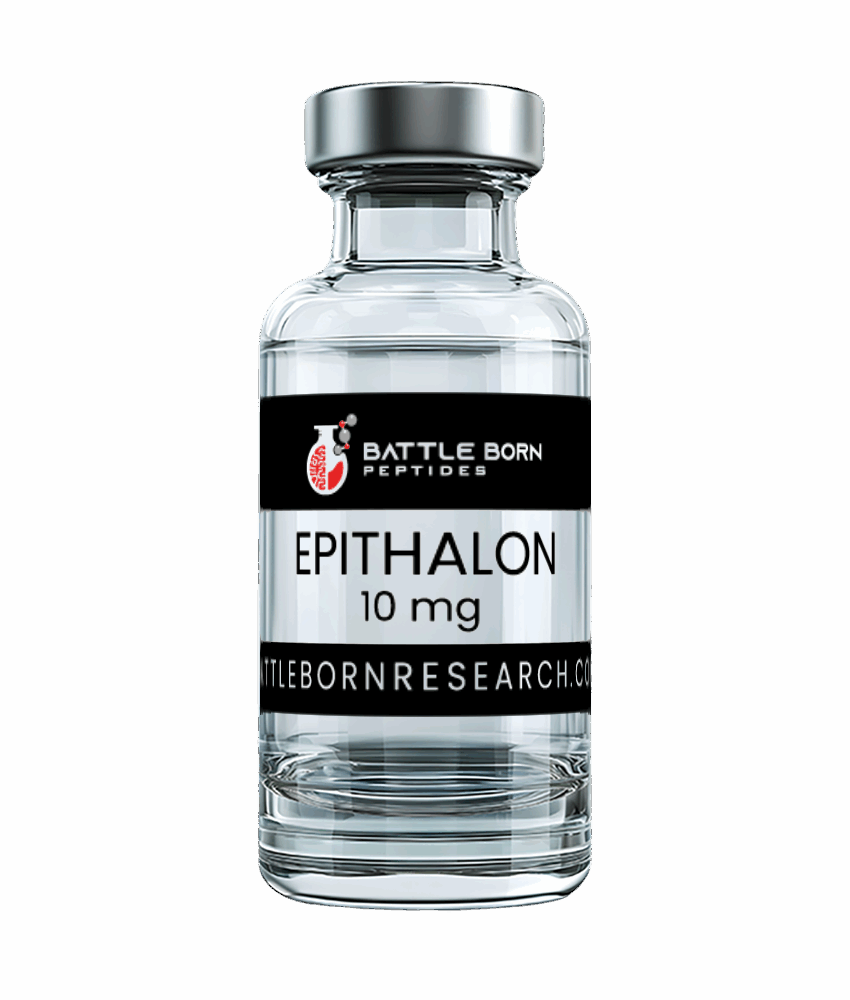
Cartalax sits in a family of short synthetic peptides sold under invented names, and it is easy to confuse with its neighbors. Epithalon is AEDG, the same three residues plus a C-terminal glycine; Cortagen is AEDP; Chonluten is EDG. A certificate for any of those says nothing about AED, which is why the sequence is printed in the specification below.
Cartalax 20mg specification
| Catalog name | Cartalax |
|---|---|
| Sequence | H-Ala-Glu-Asp-OH (AED) |
| Molecular formula | C12H19N3O8 |
| Average mass (free acid) | approx. 333 g/mol |
| Amount per vial | 20 mg |
| Form | Lyophilized powder, sealed vial |
| HPLC purity | ≥98% |
| Shelf life | 36 months in the sealed vial |
How Cartalax is analyzed
Two of AED’s three residues are acidic, which makes the molecule very polar. On a C18 column it retains weakly and elutes early, close to the region where salts and polar synthesis residues also appear, so a shallow gradient starting at low organic strength resolves it far better than a generic peptide method. It carries no tryptophan, tyrosine or phenylalanine, so it has essentially no absorbance at 280 nm and is read on the peptide bond near 214 nm. On a mass spectrum the protonated molecule should appear just above 333; a strong signal well away from that points to a different sequence or an undeclared salt form.
Because the molecule is so small, counter-ion mass is a larger share of the vial than it is for a long peptide, which is why chromatographic purity and net peptide content are treated as separate figures. The reverse-phase HPLC result for Cartalax is published on this page, and since the vials carry no lot or batch identifiers, each one is tied to that result by its crimp and cap color.
Research contexts for Cartalax
- Sequence-identity and nomenclature work across the short synthetic peptide family
- Gene-expression assays in chondrocyte, tenocyte and extracellular-matrix cell cultures
- Method development for highly polar, early-eluting analytes on reverse-phase columns
- Comparative analytical studies alongside Epithalon, Chonluten and Cortagen
Cartalax is sold as an in-vitro laboratory reference material and is not intended for use in people or animals.
Cartalax questions
Is Cartalax the same as Epithalon?
No. Epithalon is the tetrapeptide AEDG, while Cartalax stops at AED. The missing glycine changes the mass by 57 Da and shifts the retention time, so the two are distinct compounds.
Why is Cartalax sold in a 20 mg vial?
Short bioregulator-type peptides are conventionally catalogued at 20 mg, and at roughly 333 g/mol that amount represents a large number of moles compared with the same mass of a longer peptide.
Why does the chromatogram use 214 nm rather than 280 nm?
AED has no aromatic side chains to absorb at 280 nm, so the peptide bond at around 214 nm is the only useful UV signal for this sequence.
Buying Cartalax 20mg in the USA
Cartalax ships from inside the United States with tracking on every parcel, and orders over $100 ship free. Laboratories running repeat series can ask about bulk pricing. We sell only to research institutions, licensed researchers, universities and laboratory R&D purchasers. For the full identity reference, including how AED compares with its sequence neighbors, read What Is Cartalax? Sequence, Identity and Analytical Profile.
Cartalax 20mg is a laboratory reagent for in-vitro research only: not for human or veterinary use, and we provide no preparation, handling or dosing guidance.


Reviews
There are no reviews yet.