



Reference material on the compounds we supply and on the practice of buying them: sequence and identity references, how purity is actually measured, how to evaluate a supplier, and what research-use status requires in practice. Nothing here describes what any compound does or how it would be used.
Compound Identity
Sequence, nomenclature and analytical identity for individual compounds. What the name on the vial actually refers to.
52 articlesAcetylated and Amidated Peptide Termini: Notation, Mass and Identity
How N-terminal acetylation and C-terminal amidation change peptide mass, charge and identity, and how to spot the difference in sequence notation.
Read the referenceCompound IdentityBPC-157 on HPLC: Why Proline Isomerism Widens the Main Peak
Why BPC-157 shows a broad or shouldered HPLC peak: slow proline cis-trans isomerization, how to tell it from impurities, and what it means for purity.
Read the referenceCompound IdentityCAS Registry Numbers and Peptide Identity: What the Number Designates
What a CAS Registry Number identifies for a peptide, why salts, amides and complexes get separate numbers, and how to check one for errors.
Read the referenceCompound IdentityCJC-1295 vs CJC-1295 DAC: What Is the Difference?
The three letters in brackets change the molecule, its mass and its analysis. The distinction that causes the most ordering errors in this category.
Read the referenceCompound IdentityCyclic Versus Linear Peptides: What Cyclization Changes and How to Confirm It
How disulfide, lactam and head-to-tail cyclization change a peptide, and why a matching mass cannot confirm the intended ring on its own.
Read the referenceCompound IdentityDisulfide Connectivity in Synthetic Peptides: Formation, Scrambling and Mapping
How peptide disulfide bonds are formed, why bridges scramble, and why mass and HPLC alone cannot show which cysteines are paired with which.
Read the referenceCompound IdentityEndogenous Versus Synthetic Peptides: When Matching Sequence Means Matching Molecule
When a synthetic peptide is the same molecule as its natural counterpart, and where modifications, impurities and stereochemistry make them differ.
Read the referenceCompound IdentityGHK vs GHK-Cu: Registry Numbers, Masses and the Copper Complex
GHK and GHK-Cu compared: CAS numbers, formulas, molecular weights, how copper binds, and why the label weight convention changes price comparisons.
Read the referenceCompound IdentityGHRH and Ghrelin-Receptor Peptides Compared by Sequence: Sermorelin, Tesamorelin, CJC-1295, Ipamorelin and Hexarelin
Sermorelin, tesamorelin, CJC-1295, ipamorelin and hexarelin compared by sequence, length, modifications and mass, and how the two classes differ on…
Read the referenceCompound IdentityGLP-1, GIP and Glucagon: Reading Incretin Nomenclature
Products named for receptor systems rather than brand names are labelled that way deliberately. How to read those names, and why the convention…
Read the referenceCompound IdentityHow to Read a Research Peptide Name: Fragments, Analogs and Salts
A practical key to research peptide names: sequence direction, fragment ranges, bracketed substitutions, terminal groups, DAC and salt forms.
Read the referenceCompound IdentityIpamorelin and Its Non-Standard Residues: Aib, D-2-Nal and D-Phe
Ipamorelin contains three non-standard residues: Aib, D-2-Nal and D-Phe. What mass, composition and HPLC can and cannot confirm about each.
Read the referenceCompound IdentityLong R3 IGF-1: Why Disulfides and Folding Change the Analytical Questions
Why Long R3 IGF-1 is quoted at 9111.5, 9117.6 or 7649 Da, what intact mass misses about disulfide pairing, and which methods reveal folding.
Read the referenceCompound IdentityMelanotan-I, Melanotan-II and PT-141 Compared: Structure, Mass and Identity Data
Melanotan-I, Melanotan-II and PT-141 compared by sequence, ring structure, C-terminus, formula and mass, and what that means for identity data.
Read the referenceCompound IdentityPeptide Isoelectric Point: Charge, pH and Solubility
How a peptide's isoelectric point is set by its sequence and termini, why solubility is lowest near the pI, and where it matters in analysis.
Read the referenceCompound IdentitySelank Structure: Tuftsin Core, Pro-Gly-Pro Tail and Purity Checks
Selank explained structurally: the tuftsin core, why a Pro-Gly-Pro tail resists exopeptidases, and why 280 nm purity figures mislead for this peptide.
Read the referenceCompound IdentitySemax and Methionine Oxidation: Reading the +16 Da Companion Peak
Semax sequence explained: how it differs from ACTH(4-10), why methionine oxidation gives a +16 Da peak, and how to read its HPLC and mass data.
Read the referenceCompound IdentityShort-Peptide Bioregulators Compared: Cartalax, Chonluten, Livagen, Pinealon, Cortagen, Cardiogen and Epithalon
Cartalax, Chonluten, Livagen, Pinealon, Cortagen, Cardiogen and Epithalon compared by sequence and mass, with HPLC behaviour and counter-ion notes.
Read the referenceCompound IdentityThymosin Beta-4 vs TB-500: Protein Versus Fragment
Thymosin beta-4 vs TB-500: why the 43-residue protein and the synthetic actin-binding fragment differ, and how identity is confirmed analytically.
Read the referenceCompound IdentityWhat Is AOD-9604? Sequence, Identity and Analytical Profile
AOD-9604 is the 16-residue hGH(177-191) peptide with an added N-terminal Tyr and a disulfide. Sequence, mass, HPLC and how to verify a vial.
Read the referenceCompound IdentityWhat Is ARA-290? Sequence, Identity and Analytical Profile
ARA-290 (cibinetide) is the 11-residue pyroglutamate peptide pEQLERALNSS. Sequence, mass, HPLC behaviour and how to verify a vial.
Read the referenceCompound IdentityWhat Is BPC-157? Sequence, Identity and Analytical Profile
An identity reference for BPC-157: sequence, nomenclature, and the analytical characteristics that shape how it behaves on a column.
Read the referenceCompound IdentityWhat Is Cardiogen? Sequence, Identity and Analytical Profile
Cardiogen is the trade designation for the tetrapeptide Ala-Glu-Asp-Arg (AEDR). Sequence, mass, chromatographic behaviour and verification.
Read the referenceCompound IdentityWhat Is Cartalax? Sequence, Identity and Analytical Profile
Cartalax is the trade designation for the tripeptide Ala-Glu-Asp (AED). Sequence, mass, HPLC behaviour, and how to verify what is in a vial.
Read the referenceCompound IdentityWhat Is Chonluten? Sequence, Identity and Analytical Profile
Chonluten is the trade designation for the tripeptide Glu-Asp-Gly (EDG). Sequence, expected mass, reverse-phase behaviour and how to verify vial…
Read the referenceCompound IdentityWhat Is Cortagen? Sequence, Identity and Analytical Profile
Cortagen is the trade designation for the tetrapeptide Ala-Glu-Asp-Pro (AEDP). Sequence, mass, why the proline matters, and how to verify it.
Read the referenceCompound IdentityWhat Is DSIP? Sequence, Identity and Analytical Profile
DSIP is the nonapeptide Trp-Ala-Gly-Gly-Asp-Ala-Ser-Gly-Glu (WAGGDASGE). Sequence, mass, HPLC behaviour and how to verify what is in a vial.
Read the referenceCompound IdentityWhat Is Epithalon? Sequence, Identity and Analytical Profile
Epithalon is the tetrapeptide Ala-Glu-Asp-Gly (AEDG), about 390 g/mol. Sequence, the related short peptides, HPLC behaviour and verification.
Read the referenceCompound IdentityWhat Is FOXO4-DRI (Proxofim)? Identity and Analytical Profile
FOXO4-DRI, also sold as Proxofim, is a 46-residue all-D retro-inverso peptide of about 5,358 g/mol. What that means and why it analyses oddly.
Read the referenceCompound IdentityWhat Is GHK-Cu? The Copper Tripeptide, Analytically
GHK-Cu is a metal complex, not simply a tripeptide, and that changes how it must be handled analytically. An identification reference.
Read the referenceCompound IdentityWhat Is Gonadorelin? GnRH Decapeptide Identity Reference
Gonadorelin is synthetic GnRH: a ten-residue peptide with a pyroglutamate N-terminus and a C-terminal amide. Sequence, mass and verification.
Read the referenceCompound IdentityWhat Is hCG? Why a 5,000 IU Vial Is Measured in Units, Not Milligrams
hCG is a two-chain glycoprotein with no single mass, so vials carry WHO-referenced International Units. What 5,000 IU does and does not tell you.
Read the referenceCompound IdentityWhat Is Hexarelin? Sequence, Identity and Analytical Profile
Hexarelin is the synthetic hexapeptide His-D-2-methyl-Trp-Ala-Trp-D-Phe-Lys-NH2. Sequence, mass, HPLC behaviour and how to verify a vial.
Read the referenceCompound IdentityWhat Is IGF-1 LR3? Sequence, Identity and Analytical Profile
IGF-1 LR3 is an 83-residue IGF-1 analogue with Arg3 and a 13-residue N-terminal extension. Sequence, intact mass and how to verify a vial.
Read the referenceCompound IdentityWhat Is Ipamorelin? Sequence and Non-Natural Residues
Ipamorelin contains residues that do not appear in proteins, and that is the most important thing to know when confirming its identity. A reference.
Read the referenceCompound IdentityWhat Is Kisspeptin? Sequence, Identity and Analytical Profile
Kisspeptin names KISS1-derived peptides; kisspeptin-10 is YNWNSFGLRF-NH2. Sequence, mass, HPLC behaviour and how to check what is in a vial.
Read the referenceCompound IdentityWhat Is Livagen? Sequence, Identity and Analytical Profile
Livagen is the trade designation for the tetrapeptide Lys-Glu-Asp-Ala (KEDA). Sequence, mass, charge behaviour on HPLC and how to verify it.
Read the referenceCompound IdentityWhat Is LL-37? Sequence, Identity and Analytical Profile
LL-37 is the 37-residue cathelicidin-derived peptide LLGDFFRKSKEKIGKEFKRIVQRIKDFLRNLVPRTES. Mass, HPLC behaviour and how to verify a vial.
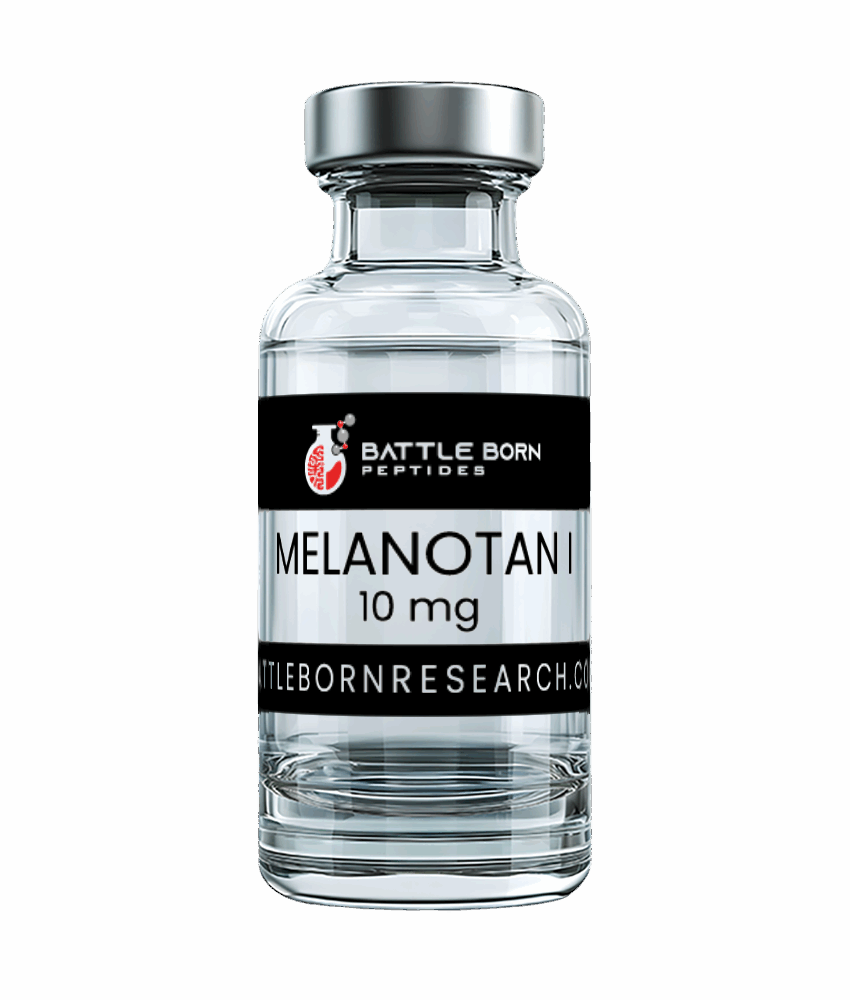
Read the referenceCompound IdentityWhat Is Melanotan I? Sequence, Identity and Analytical Profile
Melanotan I is the linear 13-residue peptide [Nle4, D-Phe7]-alpha-MSH, also named afamelanotide. Sequence, mass, HPLC behaviour and how to verify a…
Read the referenceCompound IdentityWhat Is Melanotan II? Sequence, Identity and Analytical Profile
Melanotan II is the cyclic lactam heptapeptide Ac-Nle-cyclo[Asp-His-D-Phe-Arg-Trp-Lys]-NH2. How it differs from PT-141 and how to verify a vial.
Read the referenceCompound IdentityWhat Is MOTS-c? Sequence, Identity and Analytical Profile
MOTS-c is the 16-residue mitochondrially encoded peptide MRWQEMGYIFYPRKLR. Sequence, mass, HPLC behaviour and how to verify a vial.
Read the referenceCompound IdentityWhat Is NAD+? Structure, Identity and Analytical Profile of a Dinucleotide
NAD+ identity reference: dinucleotide structure, C21H27N7O14P2 at 663.4 g/mol, the 340 nm test for NADH, HILIC and ion-pair HPLC, degradants and MS…
Read the referenceCompound IdentityWhat Is Oxytocin? Sequence, Identity and Analytical Profile
Oxytocin (CYIQNCPLG-NH2) is a nonapeptide with a Cys1-Cys6 disulfide ring. Sequence, 1007.2 mass, vasopressin comparison, HPLC and impurity checks.
Read the referenceCompound IdentityWhat Is Pinealon? Sequence, Identity and Analytical Profile
Pinealon is the trade designation for the tripeptide Glu-Asp-Arg (EDR). Sequence, mass, what the arginine does to HPLC, and how to verify it.
Read the referenceCompound IdentityWhat Is PT-141? Sequence, Identity and Analytical Profile
PT-141 (bremelanotide) is the cyclic heptapeptide Ac-Nle-cyclo[Asp-His-D-Phe-Arg-Trp-Lys]-OH. Mass, HPLC behaviour and how to verify a vial.
Read the referenceCompound IdentityWhat Is Selank? Sequence, Identity and Analytical Profile
Selank is the heptapeptide Thr-Lys-Pro-Arg-Pro-Gly-Pro: tuftsin plus Pro-Gly-Pro. Sequence, mass, and why three prolines broaden the peak.
Read the referenceCompound IdentityWhat Is Semax? Sequence, Identity and Analytical Profile
Semax is the heptapeptide Met-Glu-His-Phe-Pro-Gly-Pro, about 814 g/mol. Sequence, the methionine oxidation impurity to look for, and how to verify a…
Read the referenceCompound IdentityWhat Is Sermorelin? Identity and Its Relationship to GRF(1-29)
Sermorelin denotes a specific 29-residue amide. Understanding its relationship to the modified GRF analogues clarifies a category where names overlap…
Read the referenceCompound IdentityWhat Is SS-31? Sequence, Identity and Analytical Profile
SS-31 (elamipretide) is the tetrapeptide amide D-Arg-Dmt-Lys-Phe-NH2. Structure, mass, HPLC behaviour and how to verify what is in a vial.
Read the referenceCompound IdentityWhat Is TB-500? Identity, Nomenclature and Thymosin Beta-4
TB-500 is a name that gets applied to more than one thing. An identification reference for what it denotes, and why the distinction matters when you…
Read the referenceCompound IdentityWhat Is Tesamorelin? Sequence, Identity and Analytical Profile
Tesamorelin is GHRH(1-44) amide with an N-terminal trans-3-hexenoyl group. Sequence, mass, HPLC behaviour and how to verify a vial.
Read the referenceCompound IdentityWhat Is Thymosin Alpha-1? Sequence and Identity Reference
A longer sequence than most in this catalogue, N-terminally acetylated, and easily confused with the thymosin beta family. An identification…
Read the referenceAnalytical Methods
How purity is measured, what a chromatogram shows, and which numbers on a certificate mean what.
60 articles1H NMR for Peptide Identity: What a Proton Spectrum Confirms
What a proton NMR spectrum confirms about peptide identity and what it misses, from residue order to trace impurities, with a worked integral check.
Read the referenceAnalytical MethodsALCOA+ Data Integrity for HPLC and Chromatography Records
Chromatography records audited against ALCOA+: audit trails, manual integration, trial injections and what a complete HPLC record contains.
Read the referenceAnalytical MethodsAmino Acid Analysis: How Net Peptide Content Is Actually Measured
How net peptide content is measured by amino acid analysis or nitrogen testing, why it differs from HPLC purity, and which residues hydrolysis loses.
Read the referenceAnalytical MethodsAnalytical Method Validation for Peptide Purity: ICH Q2 Explained
What specificity, linearity, range, accuracy and precision mean under ICH Q2, applied to HPLC purity methods for synthetic peptides, with typical…
Read the referenceAnalytical MethodsAspartimide and Isoaspartate Impurities in Synthetic Peptides
How aspartimide forms at Asp residues during peptide synthesis, why isoaspartate has the same mass as the target, and which methods can tell them…
Read the referenceAnalytical MethodsBacteriostatic Water vs Sterile Water: What the Labels Mean
Bacteriostatic water is sterile water with 0.9% benzyl alcohol; sterile water has no additive. What each label means and where it matters.
Read the referenceAnalytical MethodsBioburden, Sterility and Endotoxin: Three Questions a Purity Certificate Does Not Answer
Bioburden, sterility and endotoxin are three separate microbiological tests. See what each one measures and why an HPLC purity report covers none of…
Read the referenceAnalytical MethodsCapillary Electrophoresis for Peptide Purity: A Second Separation
How capillary zone electrophoresis separates peptides by charge and size, why CE peak areas need migration-time correction, and how it cross-checks…
Read the referenceAnalytical MethodsCell Viability Assays: What the Signal Really Measures
What MTT, resazurin and other cell viability assays really measure, where they mislead in peptide research, and the controls that fix it.
Read the referenceAnalytical MethodsChoosing a Cell Line for Peptide Assays: Why the Model Shapes the Answer
How cell line choice shapes peptide assay results: authentication, mycoplasma, receptor expression, species differences and culture conditions.
Read the referenceAnalytical MethodsChoosing an HPLC Column for Peptides: Pores, Ligands and Additives
How pore size, C18, C8, C4 and phenyl ligands and the acid additive shape a peptide HPLC separation, and why column choice changes purity figures.
Read the referenceAnalytical MethodsChromatogram Peak Integration: How Processing Choices Shape Peptide Purity
How chromatogram peak integration shapes a peptide purity figure: shoulders, drop-line versus valley-to-valley splits, and baseline placement.
Read the referenceAnalytical MethodsCircular Dichroism for Peptides: What a CD Spectrum Can and Cannot Tell You
How circular dichroism reports peptide secondary structure, how to read helix, sheet and disordered spectra, and the sample conditions that distort…
Read the referenceAnalytical MethodsCo-elution in Peptide HPLC: How One Peak Can Hide Two Compounds
How co-elution hides impurities under a peptide's main HPLC peak, why it always inflates purity, and which checks detect a shared peak.
Read the referenceAnalytical MethodsCommon Peptide Synthesis Impurities and How to Spot Them
Synthetic peptides do not fail cleanly. The characteristic by-products of SPPS are near-relatives of the target, which is exactly why they are hard…
Read the referenceAnalytical MethodsCross-Contamination at the Peptide Bench: Finding and Closing the Routes
Where peptide cross-contamination happens on the lab bench, how to tell a stray peak from real chemistry, and bench habits that remove the risk by…
Read the referenceAnalytical MethodsD-Amino Acid and Retro-Inverso Peptides: Chiral Analysis
D-amino acid and retro-inverso peptides share their parent's mass. Why MS and C18 HPLC miss chirality, and which chiral methods can detect it.
Read the referenceAnalytical MethodsDeamidation or Isotope Peak? Reading the 0.984 Da Shift in Peptide Data
Deamidation adds 0.984 Da to a peptide. Learn how to tell it from the carbon-13 isotope peak and how it shows up in LC-MS and HPLC data.
Read the referenceAnalytical MethodsDeconvolution Explained: Reading Multiply Charged Peptide Mass Spectra
How deconvolution turns an ESI charge envelope into a peptide mass, a worked example, the ways it fails silently, and monoisotopic versus average…
Read the referenceAnalytical MethodsDesigning Vehicle Controls for Peptide Experiments
Why vehicle controls matter in peptide experiments, how counter-ions and solvents confound results, and the four most common control design errors.
Read the referenceAnalytical MethodsDetection and Quantitation Limits for Peptide Impurities: Reading the Fine Print
LOD, LOQ and reporting thresholds explained: why a not detected line on a peptide HPLC report depends on wavelength, sample load and method cutoffs.
Read the referenceAnalytical MethodsDiode Array Peak Purity: Reading a Pass or Fail on a Peptide Peak
How diode array peak purity checks work in peptide HPLC, why a pass is weaker than a fail, and which impurities share a spectrum and stay hidden.
Read the referenceAnalytical MethodsEdman Degradation vs MS/MS for N-Terminal Peptide Sequencing
Edman degradation and tandem MS both read peptide sequence but fail in different places: blocked N-termini, Leu vs Ile, fading cycles and fragment…
Read the referenceAnalytical MethodsELSD and CAD: Detecting Compounds UV Cannot See
How ELSD and CAD detect compounds with no UV chromophore, their calibration and mobile phase limits, and how to read a purity figure from each.
Read the referenceAnalytical MethodsError Bars Explained: SD, SEM and Confidence Intervals
Standard deviation, standard error or confidence interval? What each error bar means, why n matters, and how to read lab figures correctly.
Read the referenceAnalytical MethodsFluorescently Labeled Peptides: FITC, TAMRA, Cy Dye Pitfalls
FITC, TAMRA and Cy dye peptides: added masses, 5/6-isomer doublets, N-terminal FITC truncation and why detection wavelength changes purity numbers.
Read the referenceAnalytical MethodsFmoc vs Boc Synthesis: How the Chemistry Shapes a Peptide Impurity Profile
Fmoc vs Boc solid-phase peptide synthesis compared: how each protection strategy works and the impurity signatures, like +222 Da, that each leaves.
Read the referenceAnalytical MethodsForced Degradation and Stability-Indicating HPLC Methods
Forced degradation explained: how deliberate acid, base, oxidant, heat and light stress proves an HPLC method is stability-indicating for peptides.
Read the referenceAnalytical MethodsGhost Peaks and Baseline Artifacts in Peptide Chromatograms
Where ghost peaks, baseline drift and other artifacts in peptide HPLC come from, how blank runs diagnose them, and how they can shift a purity figure.
Read the referenceAnalytical MethodsGradient Elution in Peptide HPLC: Why Methods Ramp the Solvent
Why peptides are separated by gradient rather than isocratic HPLC, how slope and dwell volume shape retention, and why late-run baselines drift.
Read the referenceAnalytical MethodsHFBA and PFPA Ion-Pairing Reagents for Peptide HPLC
How HFBA and PFPA differ from TFA as ion-pairing reagents in peptide HPLC: added retention for basic peptides, selectivity shifts, and practical…
Read the referenceAnalytical MethodsHILIC for Short Polar Peptides That Barely Retain on C18
When short polar peptides elute near the void on C18, HILIC can retain them. How it works, which phases suit peptides, and how it compares to C18.
Read the referenceAnalytical MethodsHow a Peptide Stability Protocol Is Designed
What a peptide stability protocol specifies, how real-time and accelerated studies differ, what is tested at each pull, and how a date is derived.
Read the referenceAnalytical MethodsHow Many Digits of a Peptide Purity Result Are Real? Measurement Uncertainty Explained
Why HPLC peptide purity figures carry measurement uncertainty, how large it typically is, and how to compare 98.7% and 99.3% without over-reading…
Read the referenceAnalytical MethodsHow Multi-Peptide Blends Are Analysed: What One Vial With Three Components Should Show
How multi-peptide blends are analysed: separating co-eluting components on HPLC, per-component purity and mass. What a blend certificate should list.
Read the referenceAnalytical MethodsHow to Read an HPLC Chromatogram for a Research Peptide
A chromatogram is the most informative document a peptide supplier can publish. How to read one properly, and what a clean-looking trace can still…
Read the referenceAnalytical MethodsHPLC Area Percentage: What a Peptide Purity Figure Actually Counts
What an HPLC area percentage measures for peptides, what it leaves out, and why 99% by HPLC is not 99% peptide by weight. A guide for analysts.
Read the referenceAnalytical MethodsHPLC Carryover: Ghost Peaks From the Previous Run
What HPLC carryover is, why peptides are prone to it, how blanks and wash choice expose it, and how it can make a purity result look worse.
Read the referenceAnalytical MethodsHPLC Method Questions to Ask a Peptide Supplier
A purity percentage without a method is an assertion. The questions that separate a supplier who ran an analysis from one who bought a number.
Read the referenceAnalytical MethodsHPLC System Suitability in Peptide Analysis
What HPLC system suitability checks before a peptide sample is run, why a degraded column can inflate purity, and how to read suitability data.
Read the referenceAnalytical MethodsInside the Lyophilization Cycle: Freezing, Primary Drying and Secondary Drying
How a peptide lyophilization cycle works: freezing, primary drying and secondary drying, why cakes collapse, and why residual moisture is the key…
Read the referenceAnalytical MethodsIsotope Patterns in Peptide Mass Spectra: Reading the Peak Cluster
How to read isotope patterns in peptide mass spectra: charge from line spacing, monoisotopic versus apex peaks, sulfur at M+2 and adducts.
Read the referenceAnalytical MethodsKarl Fischer Titration and Water in Lyophilized Peptides
Why freeze-dried peptides keep some water, how Karl Fischer titration measures it, and why loss on drying and HPLC purity figures tell you something…
Read the referenceAnalytical MethodsKi, IC50 and EC50 Explained: Why Potency Numbers Do Not Compare Directly
What Kd, Ki, IC50 and EC50 each measure, why binding and functional potency figures cannot be compared directly, and how to read them.
Read the referenceAnalytical MethodsLot-to-Lot Variation and Trending Peptide Results
Why one analytical report cannot show lot-to-lot variation in a peptide, what trending reveals, and how a lab can build its own consistency record.
Read the referenceAnalytical MethodsLyophilized Peptide Cake Appearance: What Collapse, Powder and Shrinkage Mean
What a freeze-dried peptide cake's appearance can and cannot tell you: collapse, cracks, loose powder, moisture uptake and what the vial mass…
Read the referenceAnalytical MethodsMALDI or ESI: How Ionization Shapes Peptide Mass Evidence
How MALDI and electrospray ionization differ for peptides, why charge state affects one-dalton distinctions, and what to check on a mass result.
Read the referenceAnalytical MethodsMass Accuracy in ppm: How Much a Peptide Mass Match Actually Proves
How mass accuracy in ppm works for peptide identity results, what a mass match really proves, and which isomers intact mass alone cannot distinguish.
Read the referenceAnalytical MethodsMass Spectrometry for Peptide Identity: What It Proves
A matching mass is strong evidence of identity and weak evidence of purity. Knowing the difference stops a mass spectrum doing the wrong job.
Read the referenceAnalytical MethodsMeasuring TFA Counter-Ions: Ion Chromatography and 19F NMR
How ion chromatography and 19F NMR quantify TFA, acetate and chloride in peptide salts, with a stoichiometry example and evidence a TFA exchange…
Read the referenceAnalytical MethodsMonoisotopic vs Average Mass: Avoiding False Peptide Mass Mismatches
Monoisotopic and average peptide masses differ by up to several daltons. Learn why, which one your instrument reports, and how to avoid false…
Read the referenceAnalytical MethodsMoving an HPLC Method to a Second Laboratory: What Has to Travel With It
Moving an HPLC method between laboratories: why a copied peptide purity method can read higher, and how suitability criteria show it still works.
Read the referenceAnalytical MethodsN-Methylated Peptides: Cis/Trans Peaks and MS Signatures
N-methylated peptides: +14 Da isobaric traps, cis/trans conformer peaks in HPLC, hindered-coupling impurities and how to tell conformers from…
Read the referenceAnalytical MethodsOrthogonal Methods for Confirming Peptide Identity
What makes two analytical methods truly orthogonal for peptide identity, which common pairings share a blind spot, and how to match methods to risk.
Read the referenceAnalytical MethodsOut-of-Specification Results: When Retesting Is Legitimate and When It Is Not
How out-of-specification lab results should be investigated, when a retest is legitimate, why averaging hides failures, and what a certificate shows.
Read the referenceAnalytical MethodsOutliers in Laboratory Data: When Excluding a Value Is Justified
When can a laboratory legitimately exclude an outlier? Assignable causes, what Grubbs-type tests really show, and why criteria must come first.
Read the referenceAnalytical MethodsPeak Tailing in Peptide HPLC: Causes and Effect on Purity
What causes peak tailing in peptide HPLC, how tailing and asymmetry factors are calculated, and how a long tail can hide impurities in a purity…
Read the referenceAnalytical MethodsPEGylated Peptides: Polydispersity in Mass Spec and HPLC
Why polydisperse PEG turns one peptide mass into a 44 Da ladder, broadens HPLC peaks and hides free polymer from UV, plus what a report should show.
Read the referenceAnalytical MethodsPeptide Aggregation in Solution: Causes, Warning Signs and Analytical Blind Spots
Why some peptides aggregate in solution: sequence features, nucleation, concentration and pH, and what aggregation hides from an HPLC purity result.
Read the referenceAnalytical MethodsPeptide Extinction Coefficients: A280 vs A205 and A214
How to calculate a peptide extinction coefficient from Trp, Tyr and cystine, and when A205 or A214 replaces A280 for measuring concentration by UV.
Read the referenceSourcing and Procurement
Evaluating a supplier on evidence rather than adjectives, comparing quotes properly, and documenting a purchase.
24 articles10 Questions to Ask Before Your First Peptide Order
A short due-diligence list you can send in one email. The answers — and the non-answers — usually settle the decision.
Read the referenceSourcing and ProcurementBatch and Lot Numbers for Research Peptides: What They Record and What They Do Not
What a peptide batch is, what a lot number records, why results attach to batches, and how product-level and lot-level test results differ.
Read the referenceSourcing and ProcurementBuying Research Peptides on a Purchase Order or Lab Account
Laboratory procurement rarely runs on a credit card. How institutional purchasing works with a research supplier, and what to arrange first.
Read the referenceSourcing and ProcurementBuying Research Peptides: Domestic vs Overseas Suppliers
The trade-off is not simply price against quality. It is transit time, customs exposure, documentation practice and who is answerable when something…
Read the referenceSourcing and ProcurementCertificate of Analysis vs Certificate of Conformance: Reading the Paper That Comes With a Peptide
Certificate of analysis vs certificate of conformance vs certificate of origin: how to tell them apart and what each can and cannot prove about a…
Read the referenceSourcing and ProcurementChain of Custody for Peptide Samples: Keeping Test Results Traceable
What a chain of custody records, why research chemical testing rarely has one, what it can and cannot prove, and how labs can log their own samples.
Read the referenceSourcing and ProcurementCrude, Desalted or Purified: Reading Peptide Grade Labels
Crude, desalted and >95% peptide grades explained: which label is a real purity specification, why higher grades cost more, and how to choose.
Read the referenceSourcing and ProcurementGMP Grade vs Research Grade Peptides: Process, Purpose and What Neither Label Measures
GMP grade vs research grade peptides: what each label describes, why neither measures purity, and how to decide which one a laboratory project needs.
Read the referenceSourcing and ProcurementHow to Build a Supplier Qualification File
What to collect, what to keep, and what to do about a supplier who cannot provide part of it — a practical record structure for laboratory…
Read the referenceSourcing and ProcurementHow to Choose a Research Peptide Supplier: A Buyer Checklist
A framework for assessing peptide suppliers on evidence rather than adjectives: documentation, analysis, scope discipline and accountability.
Read the referenceSourcing and ProcurementHow to Choose an Independent Lab to Test a Research Peptide
Choosing an independent lab to test a research peptide: independence, ISO 17025 scope, the right methods, turnaround and the report to insist on.
Read the referenceSourcing and ProcurementHow to Compare Research Peptide Prices Properly
Price per vial is the least informative number in a quote. Four adjustments make two offers actually comparable, and they usually reorder the list.
Read the referenceSourcing and ProcurementIndependent Peptide Testing: Blind Submission and the Report
Blind submission of a peptide for independent testing: the purchase records, submission form, custody log and how to check the report that comes back.
Read the referenceSourcing and ProcurementISO/IEC 17025 Accreditation and Peptide Testing: Reading the Scope, Not the Logo
What ISO/IEC 17025 accreditation covers for peptide testing, why scope matters more than the logo, and how to verify a claim in three steps.
Read the referenceSourcing and ProcurementMatching a Vial to Its Published Test: How Crimp and Cap Colour Identification Works
How a vial with no lot number is matched to its published HPLC test by crimp and cap colour, what per-product testing shows, and what to check on…
Read the referenceSourcing and ProcurementOSHA Hazard Communication for Research Chemicals: Labels, Data Sheets and Laboratory Duties
How OSHA hazard communication applies to research chemicals: when a label is required, what it must carry, and which duties fall to the laboratory.
Read the referenceSourcing and ProcurementPlanning a Peptide Budget Across an Assay Series
Buying to the shape of a programme rather than reordering piecemeal changes both cost and variance. Here is how to think about the trade-off.
Read the referenceSourcing and ProcurementRed Flags When Buying Research Peptides Online
Some supplier language is a warning about the supplier, and some of it is a warning about your own supply chain. Here is how to tell which is which.
Read the referenceSourcing and ProcurementRetest Date vs Expiry Date: Two Different Instructions
Retest date vs expiry date for research peptides: what each means, why both depend on storage history, and how to read undated paperwork.
Read the referenceSourcing and ProcurementShipping Research Peptides: Hazmat Classification, Solvents and Dry Ice
When a research peptide shipment is hazardous material in the USA: the nine transport classes, why dry ice is regulated, and how solvents change it.
Read the referenceSourcing and ProcurementTemperature Excursions in Transit: What They Mean for Freeze-Dried Peptides
Why transit temperature excursions matter less for dry lyophilized peptides than for solutions, what mean kinetic temperature shows, and what to…
Read the referenceSourcing and ProcurementVial Closures and Headspace: How Crimps, Stoppers and Glass Protect Freeze-Dried Peptides
How vial closures affect freeze-dried peptides: nitrogen or vacuum headspace, crimp seals versus screw caps, stopper coring and glass type.
Read the referenceSourcing and ProcurementWhat Does Third-Party Tested Mean for Peptides?
The phrase is close to universal and almost never specified. Four questions turn it from a slogan back into a claim you can check.
Read the referenceSourcing and ProcurementWhat to Check When Your Peptide Order Arrives
What to verify when a shipment arrives, what to record, and what to do if something does not match — written for the receiving desk, not the bench.
Read the referenceResearch-Use Compliance
What research use only means in practice, and the rules that govern how these materials are sold, labelled and recorded.
14 articlesHow Intended Use Is Established Under FDA Rules
The determining question in this market is not what a product is but what it is represented as being for. Here is the range of evidence that answers…
Read the referenceResearch-Use ComplianceHow to Check Controlled Substance Status in the USA
How to check whether a compound is a controlled substance in the USA using 21 CFR Part 1308, class language, temporary orders and state schedules.
Read the referenceResearch-Use ComplianceHow to Read a Research Supplier Terms of Sale
The terms are where a supplier states what they actually promise. Six clauses tell you most of what you need to know, and take about ten minutes to…
Read the referenceResearch-Use CompliancePeptide Inventory Records: Labels, Logs and Tracing Results to Material
How to keep a research peptide inventory: label fields, receiving logs, internal IDs and records that trace every experimental result back to its…
Read the referenceResearch-Use CompliancePeptide Waste in US Laboratories: Sorting Solvents, Sharps, Glass and Shipping Materials
How US laboratories sort peptide waste: solvent solutions, sharps, glass, dry ice and gel packs, plus institutional, state and federal waste rules.
Read the referenceResearch-Use ComplianceRecordkeeping for Research Chemical Purchases
The question is always the same: which material produced this result? A short list of fields that makes the answer available years later.
Read the referenceResearch-Use ComplianceResale, Repackaging and Redistribution of Research Chemicals
The clauses that prohibit onward supply are not boilerplate. They are what keeps purchaser eligibility from being defeated one step down the chain.
Read the referenceResearch-Use ComplianceResearch Use Only Labelling: What Belongs on a Vial
Labelling is where a supplier stated position becomes physical. What belongs on the container, what belongs on the paperwork, and what absence means.
Read the referenceResearch-Use ComplianceSupplier, Purchaser and Bench: Who Answers for Research Material
Which obligations belong to the supplier, the buying organization and the bench user of research material, and why none of them transfer on delivery.
Read the referenceResearch-Use ComplianceTSCA R&D Exemption: What It Covers for Laboratory Chemicals
What the TSCA research-and-development exemption covers for laboratory chemicals in the US, its conditions under 40 CFR 720.36, and its limits.
Read the referenceResearch-Use ComplianceWhat a Research Peptide Safety Data Sheet Can and Cannot Tell You
Safety data sheets for research peptides explained: why fields say no data available, template red flags, and which sections deserve a lab's…
Read the referenceResearch-Use ComplianceWhat Does Research Use Only Actually Mean?
Research use only is not a disclaimer that neutralises whatever sits above it. It describes a product category, and only holds if the page agrees.
Read the referenceResearch-Use ComplianceWho Can Legally Buy Research Chemicals?
Purchaser eligibility is not a formality to click past. It is part of what makes the sale lawful, and a supplier casual about it is telling you…
Read the referenceResearch-Use ComplianceWhy a Compliant Peptide Supplier Cannot Answer Some Questions
Refusing to advise on preparation or effects looks like poor service. It is the opposite, and understanding why changes how you read any supplier.
Read the reference