


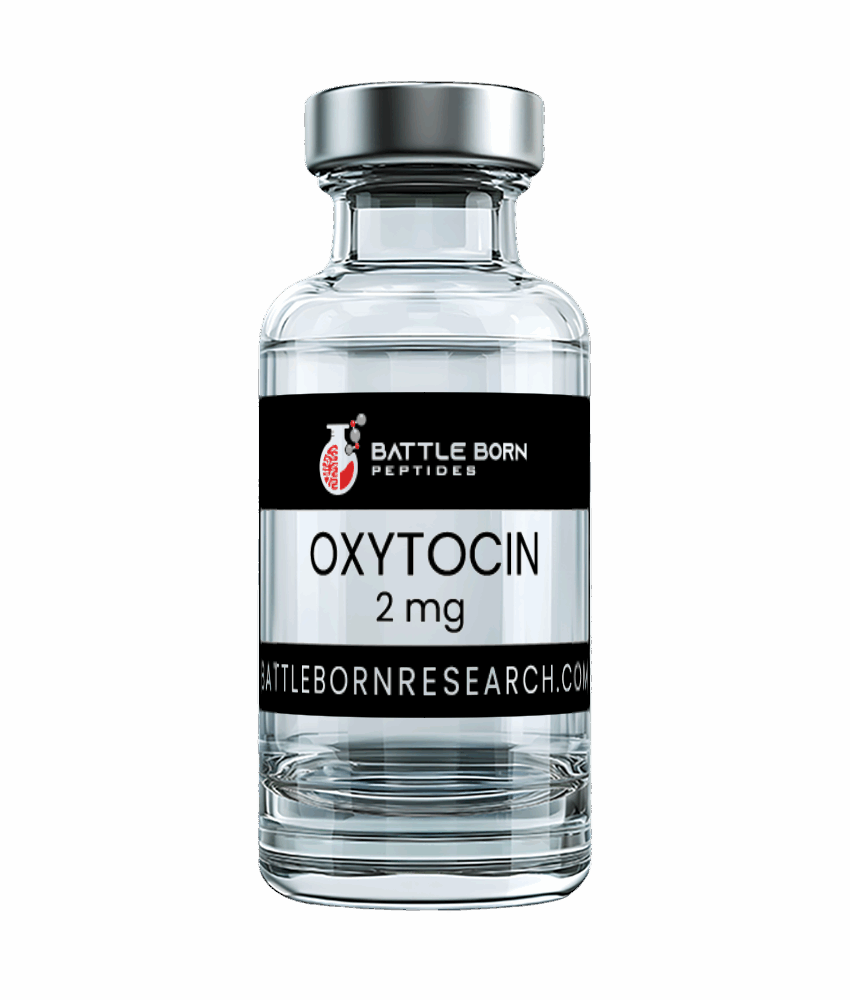

A postdoctoral researcher sets out to repeat a published cell-based reporter experiment with a synthetic peptide. The paper reports a half-maximal concentration in the low nanomolar range. Her curve has the right shape, but it sits roughly five-fold to the right. The lab manager’s first question is whether the peptide from the new supplier is any good. It is a fair question, but it is rarely the answer. By the time a peptide reaches a well, dozens of choices have been made, most of them undocumented, and any one of them can move a result by more than the material does.
This article sorts those choices into groups, explains why the supplier’s paperwork tends to take the blame first, and lists the few habits that make an assay result reproducible by someone else.
Three failures that look alike
Laboratories use “it didn’t reproduce” for three different situations, and each points to a different fix.
- Repeatability is the same person, instrument and protocol getting the same answer on another day. If this fails, the protocol itself is loose, and tightening it is the remedy.
- Reproducibility is a second laboratory following the published method and getting the same answer. Failure here usually means something material to the outcome was never written down.
- Replication is an independent group asking the same scientific question, possibly by a different route. Disagreement at this level can be the most informative of the three, because it tests the conclusion rather than the procedure.
The postdoc’s problem is a reproducibility question. The useful response is to list what the original authors did not report and work through it, not to reorder the peptide.
The preparation chain, step by step
Between the vial and the plate, a peptide is weighed, dissolved, divided, frozen, thawed and diluted, often by different people on different days. Each step introduces an error that is invisible in the final number:
- Weighing. Small masses of lyophilized solid are affected by static charge and by moisture uptake from room air, so the recorded mass may not be the mass that went into solution.
- Volume transfer. A pipette that delivers a few percent low does so every time. The error is consistent, so it never shows up as scatter, and it propagates through every dilution.
- Surface loss. At low concentrations a meaningful fraction of some peptides adheres to plastic and glass. How much is lost depends on the tubes and plates each laboratory happens to buy.
- Freezer history. Repeated freeze-thaw cycles and freezers with automatic defrost can change how much intact peptide remains, while the tube looks exactly the same.
Methods sections almost never describe these steps, yet each alters the concentration of intact compound that actually reaches the cells.
Why the vial gets blamed
The material itself does contribute. Two lots of a peptide can differ in net peptide content, so the same weighed mass is not the same number of molecules. Counter-ion form can differ as well, changing the mass fraction and what else enters the well. Purity figures from different vendors are not necessarily comparable, because they may come from different methods. And if a minor impurity happens to be biologically active in the assay, two lots with identical stated purity can still behave differently. The reasons that a quoted mass and a molar amount diverge are covered in what the mg on a peptide vial means and peptide purity versus net peptide content.
All of these are real. They are also blamed disproportionately, simply because the certificate or published test is the only formal document in the whole chain. It is the one thing that can be pointed at. The larger sources of variance are usually further along.
The biological model varies more than the peptide
Cell lines drift. Passage number, receptor expression level, confluence at the time of the experiment and whether the line has been authenticated all differ between laboratories and are seldom reported completely. Serum deserves particular attention: it is a biological product whose composition, including protease activity and growth factor content, changes from lot to lot. Switching serum lots partway through a study introduces a variable nobody is tracking, and protease activity in particular acts directly on a peptide in the medium.
Many effects reported in the peptide literature are modest. When the effect is of similar size to the accumulated handling and model differences, disagreement between competent laboratories is the expected outcome, not evidence of misconduct. Publication bias adds to this: experiments that work are written up and those that do not usually are not, so the literature over-represents favorable conditions.
What to record so someone else can repeat it
| Source of variation | Example | How to capture it |
|---|---|---|
| Material identity | Supplier, product, stated purity | Record the product, order date and the published test it matches |
| Actual concentration | Nominal versus measured stock | Measure by UV absorbance where the sequence has aromatic residues; record the method |
| Handling history | Aliquot age, number of thaws | Label each working solution with an ID, date and thaw count |
| Model state | Passage number, serum lot, confluence | Log them per experiment, not per project |
| Assay validity | A genuine negative versus a failed run | Include a positive control with a known response on every plate |
Two further habits help. Where possible, use one source of material across an entire series, so that material differences cannot masquerade as an effect. And write down the preparation chain, not just the final concentration, because the chain is where most undocumented differences live.
Where a supplier’s part ends
A supplier can make material traceable and describe it accurately. Battle Born products are laboratory reference materials; each product has an independent reverse-phase HPLC result published for it, testing is per product rather than per production batch, and vials carry no batch or lot numbers. A vial is matched to its published test by crimp and cap color, as described in matching a vial to its published test. Recording that color alongside the order date gives a laboratory the link it needs in its own records.
Everything after delivery, from the balance to the plate reader, is assembled locally and usually accounts for most of the variance. An honest investigation of a failed reproduction starts with the material and then keeps going.
Questions
Is a shifted concentration-response curve evidence of poor material?
Not on its own. Net content differences, handling losses, pipetting bias and cell model changes can each shift a curve several-fold without any problem in the peptide.
How can a laboratory tell a true negative from a failed assay?
With a positive control that produces a known response on the same plate. If the control behaves, a flat result for the test compound carries meaning.
Why measure concentration instead of calculating it from weight?
Weighed mass includes counter-ion and water and is affected by static and humidity. A direct absorbance measurement, where the sequence allows it, removes several of those errors at once.
Does using one source of material for a whole study matter?
Yes. It prevents differences between sources from appearing as an experimental effect partway through a series.
Research use only. All products supplied by Battle Born Peptides are laboratory reference materials for in-vitro research and analytical use by qualified professionals. They are not drugs, foods, dietary supplements, cosmetics or medical devices; they are not approved by the FDA or any other regulator for use in humans or animals; and they are not intended to diagnose, treat, cure, mitigate or prevent any disease, or to affect the structure or any function of the body of humans or animals. Nothing in this article is preparation, handling or dosing guidance. See our full research-use terms.