

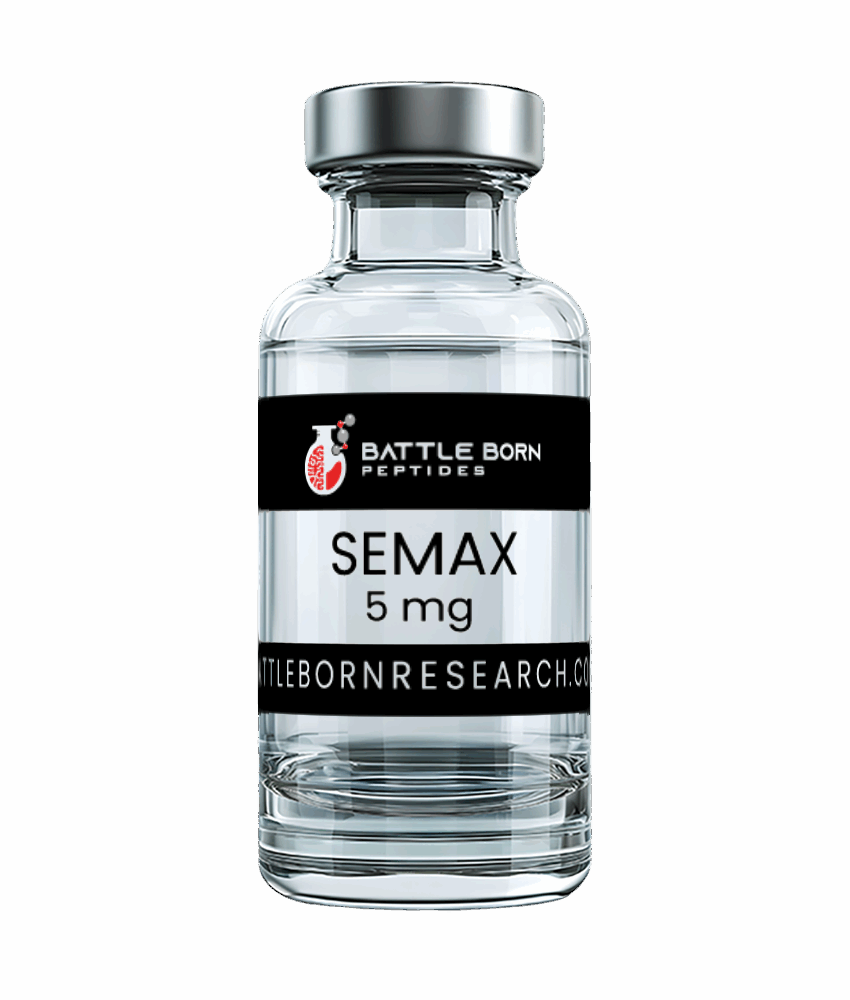


A synthetic peptide is almost never supplied as a free base. It arrives as a salt, and which salt it is affects the mass in the vial, the calculation you do with it, and in some systems the assay itself.
Where trifluoroacetate comes from
Reverse-phase purification of peptides is conventionally run with about 0.1% trifluoroacetic acid in the mobile phase. TFA holds the mobile phase at low pH and ion-pairs with basic side chains, sharpening peak shape. When the purified fractions are lyophilised, the TFA does not simply disappear: it remains associated with basic residues as trifluoroacetate.
How much depends on the sequence. Every lysine, arginine and histidine, plus the N-terminal amine, is a potential site. A peptide with several basic residues can carry several equivalents of TFA, and the mass involved is not trivial — trifluoroacetic acid has a molecular weight of about 114, so a few equivalents on a mid-sized peptide represents a meaningful fraction of the powder on the balance.
The effect on net peptide content
Counter-ion mass is one of the main reasons net peptide content sits below chromatographic purity. The trifluoroacetate does not absorb usefully at 214 nm and does not appear in the purity calculation, but it is fully present when you weigh the vial. A laboratory calculating molarity from vial mass alone, using purity as a proxy for peptide content, will systematically overestimate concentration.
Acetate and other forms
Peptides intended for applications where trifluoroacetate is unwelcome are often exchanged into acetate, typically by ion exchange or by repeated lyophilisation from dilute acetic acid. Acetate has a lower molecular weight than trifluoroacetate, so an acetate salt of the same sequence generally has a higher net peptide content for the same nominal mass. Hydrochloride forms are also encountered.
The consequence for a purchaser is direct: the same sequence in two salt forms is two different materials on a balance. If you are comparing your results against earlier work, or against another laboratory, the salt form is part of what you are comparing.
Why it can matter beyond the arithmetic
Residual trifluoroacetate is documented as being capable of interfering with some in-vitro systems, and sensitivity varies considerably between assays. Whether it matters for your work is a question for you and your protocol, not for a supplier — we can tell you what form a product is supplied in, and that is the appropriate limit of our contribution.
What to record
Alongside the sequence and the supplier, record the counter-ion form, the net peptide content and the published purity analysis. Those four fields let a future reader reconstruct exactly what was in the vial. Our product pages list counter-ion form and net peptide content next to the published independent HPLC analysis for that product, because a laboratory calculating a concentration needs all of them and cannot derive any one from the others.
Research use only. All products supplied by Battle Born Peptides are laboratory reference materials for in-vitro research and analytical use by qualified professionals. They are not drugs, foods, dietary supplements, cosmetics or medical devices; they are not approved by the FDA or any other regulator for use in humans or animals; and they are not intended to diagnose, treat, cure, mitigate or prevent any disease, or to affect the structure or any function of the body of humans or animals. Nothing in this article is preparation, handling or dosing guidance. See our full research-use terms.