
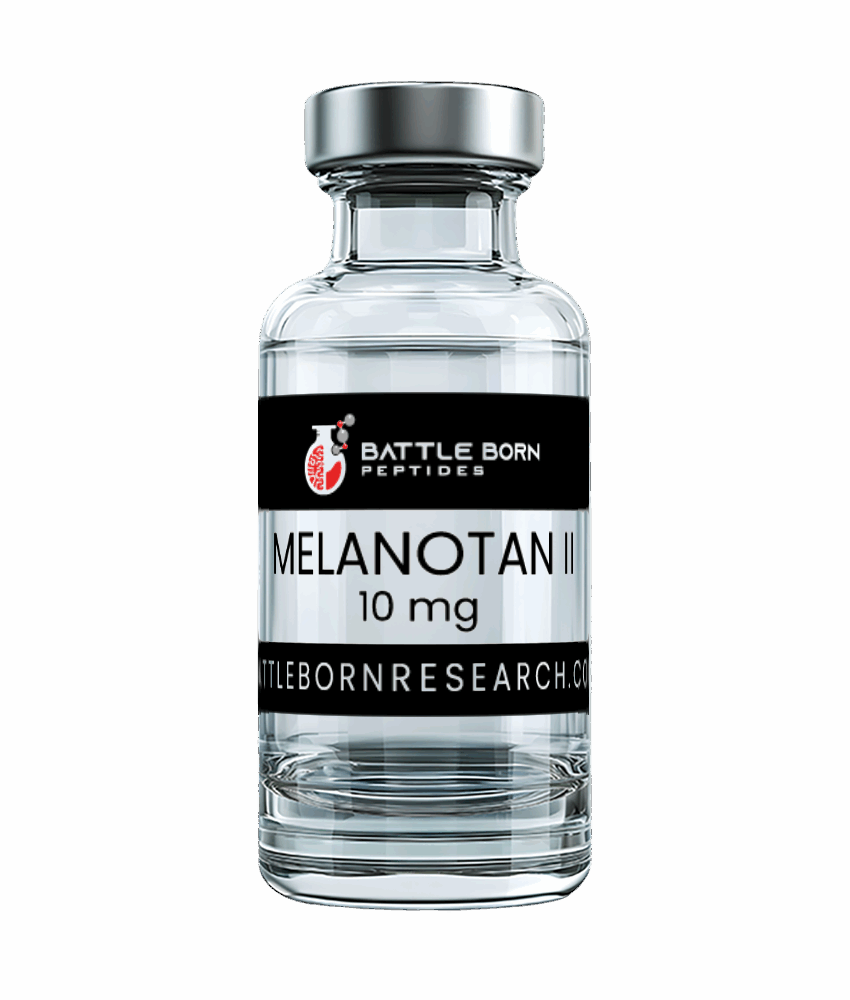


This is an identity reference for GHK-Cu. It describes what the name denotes and the analytical consequences of its structure. It does not describe what GHK-Cu does, and it offers no preparation, handling or dosing guidance.
What the name GHK-Cu refers to
GHK is a tripeptide: glycyl-L-histidyl-L-lysine, sequence Gly-His-Lys. GHK-Cu denotes its complex with copper(II), in which the metal is coordinated by the peptide — principally through the imidazole nitrogen of histidine and backbone nitrogens.
The distinction between GHK and GHK-Cu is not cosmetic. They are different substances with different molecular weights, different appearance, and different analytical behaviour. The copper complex is characteristically blue; the free peptide is not. If a product name, a specification and a photograph disagree on which one is present, resolve that before ordering.
Why a metal complex complicates analysis
UV behaviour. The copper(II) centre has its own absorbance in the visible region, which is why the material is blue, and coordination alters absorbance in the UV as well. A purity method developed for an ordinary peptide is not automatically appropriate here, and a supplier who has not adjusted for it may be reporting a number of uncertain meaning.
Complex stability during chromatography. Reverse-phase methods for peptides conventionally run in acidic mobile phases, typically around 0.1% trifluoroacetic acid. Metal–peptide coordination is pH-sensitive, and acidic conditions can dissociate the complex on-column. A trace may therefore be reporting on the free peptide, on the complex, or on a mixture, and which of those it is depends on the method rather than on the vial.
Copper content is its own measurement. Peptide purity and metal content are separate questions. A complete picture of a GHK-Cu product involves the peptide analysis plus a determination of copper stoichiometry, and the second is not derivable from the first.
Aromatic character. Histidine’s imidazole absorbs in the UV but is not equivalent to a tryptophan or tyrosine for quantification purposes. Detection at 214 nm remains the appropriate basis for a general purity assessment.
Nomenclature to check
Product names in this space vary between GHK, GHK-Cu, copper peptide and copper tripeptide-1. Only the sequence plus an explicit statement about the copper complex identifies the material unambiguously. Check both.
Confirming identity independently
The tripeptide and its copper complex are both indexed in public chemical databases, and You can reach those GHK-Cu database records from links on the product page. For a metal complex it is worth confirming the exact entity described — free peptide, complex, or a specific salt — rather than accepting a general name.
What we publish
GHK-Cu sits in our extracellular matrix and cell-migration peptides category. Its product page carries an independent reverse-phase HPLC analysis with vial size and the figures needed for a molarity calculation. GHK-Cu vials are not lot-numbered, so the crimp and cap color are what tie it to the published result.
Research use only. All products supplied by Battle Born Peptides are laboratory reference materials for in-vitro research and analytical use by qualified professionals. They are not drugs, foods, dietary supplements, cosmetics or medical devices; they are not approved by the FDA or any other regulator for use in humans or animals; and they are not intended to diagnose, treat, cure, mitigate or prevent any disease, or to affect the structure or any function of the body of humans or animals. Nothing in this article is preparation, handling or dosing guidance. See our full research-use terms.