
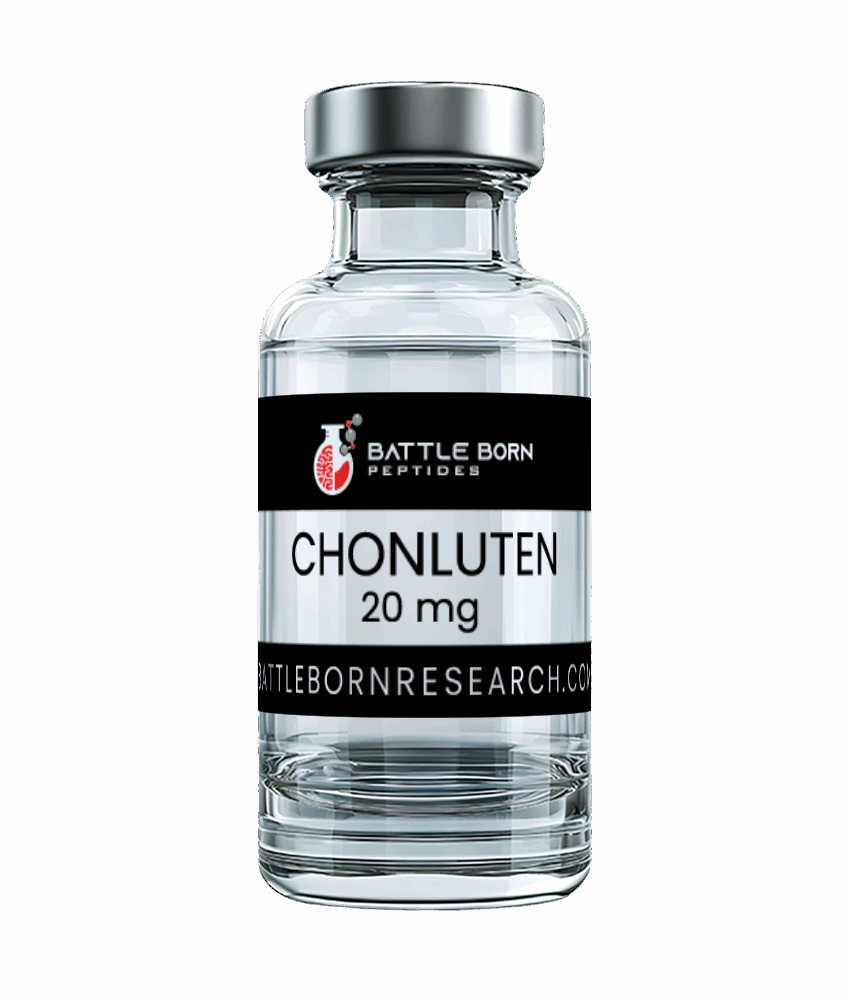


A purity figure on a product page is only worth what the method behind it can support. This page explains the one measurement we rely on, reverse-phase HPLC carried out by an independent laboratory, what it does and does not establish, how a vial without a lot number is tied to its result, what the specification table on each product page commits us to, and how to check our identity claims against public databases before you order.
Who does the testing
Every product in the catalog is analyzed by an independent laboratory, meaning a laboratory with no commercial stake in the result, using high-performance liquid chromatography. We do not run the analysis ourselves. A result on file is tied to the material supplied under a given closure color, not to the catalog entry as a whole, so the figure you are sent is for the population of vials your vial belongs to. We do not name the laboratory on this site, and we do not claim mass spectrometry, endotoxin or sterility testing, because those are not part of the standing method.
What reverse-phase HPLC establishes
The sample is loaded onto a C18 column and eluted with a water and acetonitrile gradient, usually with 0.1 percent trifluoroacetic acid as the ion-pairing modifier. Peptides separate by hydrophobicity: short, polar sequences such as the tripeptide bioregulators elute early, and longer sequences with more hydrophobic residues elute later. The detector reads UV absorbance, and for our products the reported wavelength is 214 nm, where the peptide bond itself absorbs. That matters for sequences with no tryptophan, tyrosine or phenylalanine, which have almost no absorbance at 280 nm and would be invisible to a method set up for proteins.
The figure that reaches the product page is area percent: the area of the main peak divided by the total area of all peaks in the chromatogram, with the solvent front and gradient artifacts excluded. Our specification for every peptide is 98 percent or higher by that measure. An area-percent result tells you what fraction of the UV-absorbing material in the vial elutes as a single species under those conditions. It is the right first measurement for a synthetic peptide, because the common synthesis impurities, deletion sequences, incomplete deprotection products and oxidized variants, are usually resolved from the parent peak on a well-chosen gradient.
What it does not establish
We would rather state the limits ourselves than have you discover them. Area percent is not net peptide content. A vial labeled 20 mg contains the peptide together with counter-ions from purification, typically trifluoroacetate, and residual water; chromatographic purity says nothing about how much of the 20 mg is peptide by mass. Our article on what the milligram figure on a vial means walks through the difference. Area percent is not a proof of identity either. A single sharp peak at the expected retention time is consistent with the expected compound, but retention time alone does not distinguish a sequence from a close analog with similar hydrophobicity; identity in the strict sense requires an orthogonal method such as mass spectrometry, which we do not claim. The HPLC method also says nothing about sterility, endotoxin, residual solvent or heavy metals, and nothing we sell is represented as sterile or pyrogen-free. Section 14 of our Terms and Conditions records that in as many words.
Why our vials carry no lot number, and what they carry instead
Our vials are not printed with a batch or lot number. We say so in the Terms and here, because a buyer who expects a lot number and does not find one should hear the reason from us. The identifier we use instead is the closure: the color of the aluminum crimp and the color of the cap. Each HPLC result on file is recorded against the product name and the crimp and cap colors of the vials it covers, and material under a different closure color is matched to its own result. The practical consequence is that the pair of colors on the vial in front of you is the key to its result, and the two things we need from you to retrieve it are the product name and those colors.
This system has a limitation we should also state. A closure color identifies a tested population of vials; it does not give each vial a unique serial, and it does not by itself record a fill date. If your institution’s quality system requires a supplier lot number on incoming material, record the closure colors and the date of the HPLC result we send you in its place, and tell us if that is not sufficient for your purposes. Our research library has a longer discussion of what batch and lot numbers record and what they do not.
What the specification table on each product page states
Every product page carries a specification table, and each row in it is a commitment rather than a description. Catalog name is the name we sell the material under, which for the bioregulator peptides is a coined designation and not a systematic one. For a defined synthetic peptide the sequence is written in three-letter code with the terminal groups shown and the one-letter code alongside, and it is the row that identifies the material; a result for a neighboring sequence, such as AEDG against AED, tells you nothing about the vial you hold. The incretin-receptor research compounds are an exception: their tables state a receptor designation, formula, mass and CAS number, and we describe them by receptor family rather than by sequence. Molecular formula and average mass are given for the free acid unless the page says otherwise, so that you can compare them with a public registry entry; for a heterogeneous glycoprotein such as hCG the formula row says “not applicable” and the content row is stated in international units. Amount per vial is the nominal fill. Form is lyophilized powder in a sealed vial. HPLC purity is the specification, 98 percent or higher by area, that the material is sold against and that the result on file for its closure color is read against. Shelf life is stated for the sealed vial, 36 months for the peptides.
Below the table, an analysis section describes how that sequence behaves on a C18 column and which detection wavelength suits it, so a laboratory re-testing the material has a starting point for a method.
How to verify identity against public databases
Each product page ends with identity references: search links into PubChem, ChEMBL and UniProt for the compound. These are structural and registry resources, not evidence of any effect, and we provide them so that the sequence, formula and mass in our table can be checked against a record we do not control. Open the PubChem entry and compare the molecular formula and mass with the table; small differences in average mass usually reflect rounding or a salt form, while a difference of a residue mass, 57 Da for glycine or 71 Da for alanine, means a different sequence. For peptides derived from a native protein, the UniProt record lets you confirm the parent sequence and the fragment boundaries. For a coined name with no registry entry of its own, search by sequence rather than by name. If anything in our table disagrees with a registry record, tell us; we would rather correct a row than defend it.
How to request the HPLC result for a vial
Results are not published on this site. They are available on request for any product, before or after purchase. Reply to your order confirmation email, or use the form on the contact page, and state the product name and the crimp and cap colors of the vial, or, if you have not ordered yet, the product name alone and we will send the result for the closure currently shipping. We send the chromatographic result as received from the laboratory. If you intend to re-test the material yourself, our article on choosing an independent laboratory to test a research peptide explains what to ask for, and the Refund Policy sets out the reimbursement that applies if an accredited laboratory reports the material below our specification.
What we do not provide
We answer questions about catalog identity, vial contents, the HPLC result on file and order status. We do not provide preparation, handling or dosing guidance, and section 18 of the Terms records that we will not do so on request. The analysis section on a product page describes how the material behaves on a chromatography column; it is laboratory analytical information and must not be read as anything else. The products are supplied as reference materials for in-vitro research, and decisions about their use inside a laboratory belong to the qualified researcher and their institution.
All products are sold for laboratory research use only and are not for human or animal use. Nothing on this page is preparation, handling or dosing guidance.